
Summerlin South Past Residents Sources
A backward address trail changes tools as the date moves. Clark County property and Recorder systems are the best documented route for a modern parcel and recorded transfers. Historical household research then moves to directories, newspapers, maps, and library databases. Summerlin South’s development era matters: a missing older address can mean a street or subdivision was not yet created, rather than that a household has been lost from the record.
| Source | Years it covers | Where held | What it shows |
|---|---|---|---|
| Clark County Official Records index | 1988-present | Recorder AcclaimWeb, public research area, and copy routes | Recorded parties, document type, date, legal-description and instrument clues |
| Recorder microfilm | 1909-current systems | Recorder public research and counter route | Earlier recorded instruments when the online Official Records index stops |
| Assessor and OpenWeb parcel records | Current and prior-owner options vary by search | Clark County online tools and counter | APN, legal subdivision, lot or block, recorded-document clue, location, and owner or mailing fields |
| Regional directories and newspapers | Title-specific historical runs | UNLV and Library District resources | Dated household, address, obituary, announcement, and street-context leads |
| Building, Fire, and Public Works records | Availability varies; older records can be incomplete | County document and development-record channels | Permit, plan, development, and construction chronology |
Use one source to choose the next, not to make every claim. A Recorder party name identifies a role in an instrument. An Assessor card can separate location and mailing address. A historical directory is a snapshot from its publication year. Together they can support a careful house-history sequence.
Freeze a Summerlin South Parcel First
Begin with the current situs address in Clark County OpenWeb or the Assessor’s real-property search. Save the APN, legal subdivision, lot and block, recorded document number and date, jurisdiction, and location address. Keep the owner or mailing field separate from the location field. The Assessor’s City/Town choice describes a legal boundary, not necessarily the postal city, and a mailed tax notice can use a different city or ZIP.
A parcel can also have a parent and child relationship. That is common in development-era land records, where a broad tract later becomes individual lots. The present lot’s parent is not automatically the previous household’s parcel. Record the parcel-tree relation before looking for a name, especially when a deed predates the creation of the current lot.
Note: An APN and legal description remain more stable than a street label when a development parcel is split or re-platted.
Summerlin South Past Residents in Parcel Trees
Clark County’s parcel tree can expose the connection between a selected lot and its parent or child parcels, along with owner fields, acreage, tax district, and document or deed dates. In the captured example, a parent Woodside Homes tract had 199 children and a Summerlin South Community Association parcel appeared in the chain. That is a development and common-area clue, not a list of people who lived nearby.
Clark County Recorder office information explains the Recorder’s role for deeds, liens, maps, and recorded documents. Use the current parcel’s recorded document number, legal description, and APN to move from the property card into the official instrument index rather than relying on a street name alone.
The Recorder channel supplies the recorded-document trail, while the parcel tree supplies the development relationship that makes the next instrument search more precise.
Summerlin South Past Residents in Recorder Records
Clark County Recorder AcclaimWeb offers Simple Search, Name, Parcel Number, Instrument Number, Document Type, Book/Page, Record Date, Total Value, and Legal Description paths. Parcel or instrument searching is the cleaner choice when the parcel card gives a number. A name search can help follow recorded parties, but a trust, association, lender, borrower, trustee, or company must be identified by its instrument role instead of described as a resident.
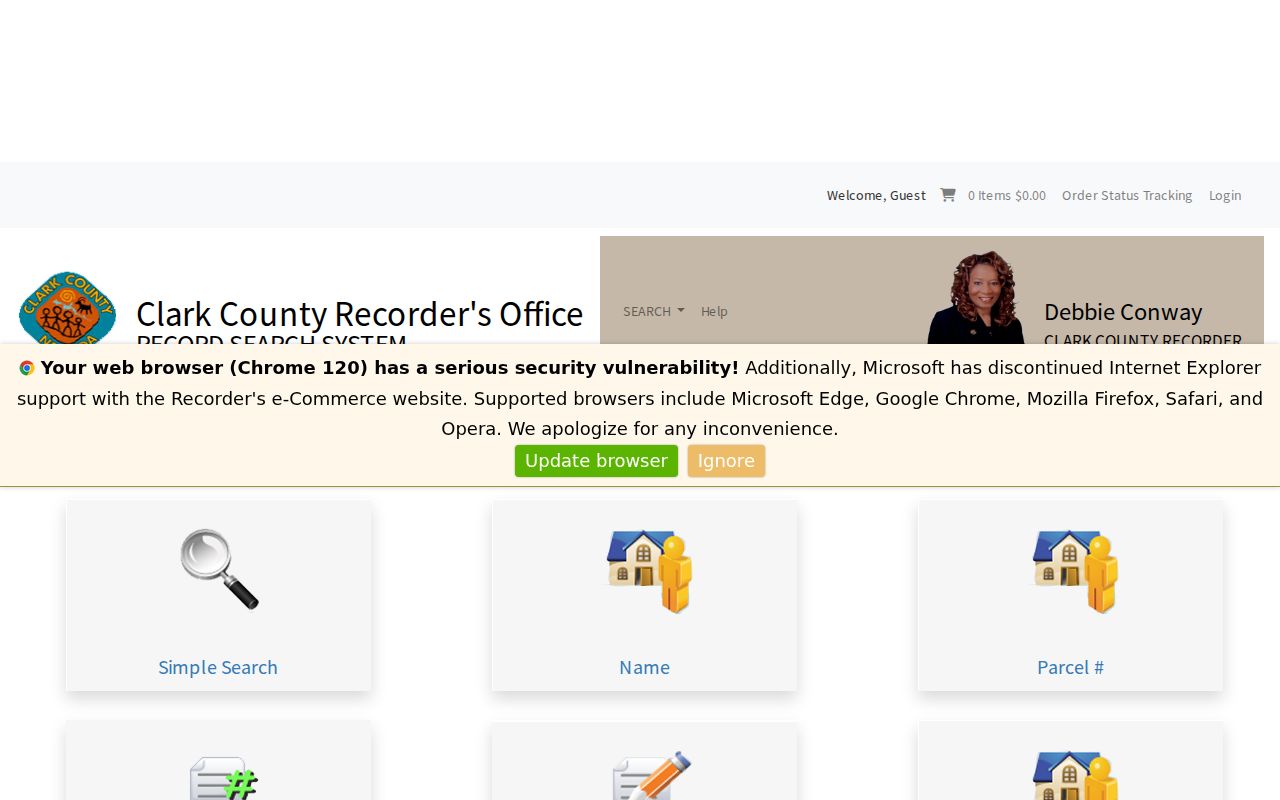
The live search home is the starting point for instrument, parcel, name, and date work, not a complete archive of free document images.
The online index is a summary. It identifies principal parties, document type, recording date, and instrument or book-page clues. Original documents can be inspected in the Records Research public viewing area or purchased. A recorded date is a transfer or recording event, not proof that a buyer moved in that day.
Summerlin South Past Residents Before 1988
The Official Records index begins in 1988, but Clark County Recorder material reaches back to the county’s 1909 beginning through microfilm and current systems. The Recorder’s preservation history describes Paul Horn’s microfilming of bound volumes from 1909 through 1953, including deeds, trust deeds, mortgages, mining notices, and marriages. Later projects moved microfilm to Digital Reel and expanded public research access. That history explains why an earlier deed may be available through a counter or microfilm process even when it is not click-to-view online.
Recorder statistics and coverage information is the useful check before assuming a digital search is complete. The office reports an online Official Records index from 1988, UCC from 1986, and federal tax liens from 1984 forward. Bring the APN, instrument number, book and page, party names, and a narrow date range when moving to the public research area.
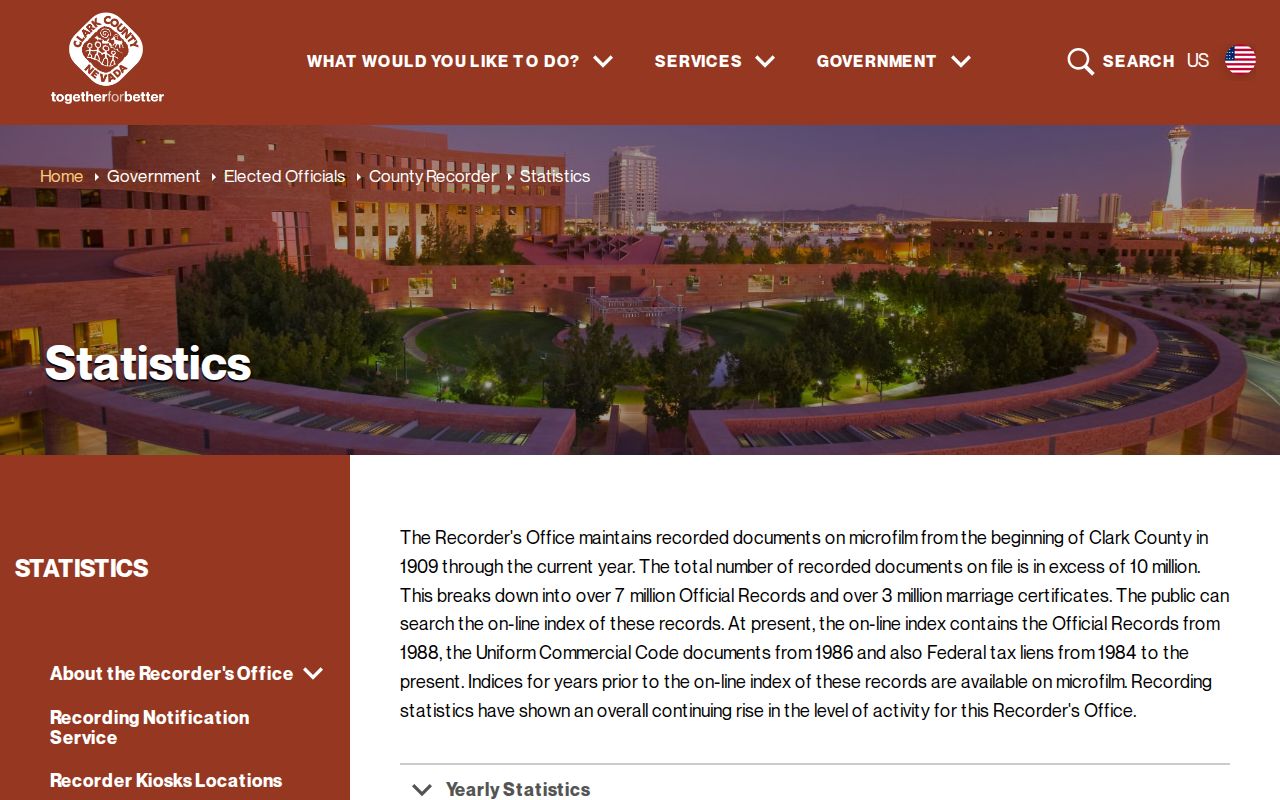
The coverage distinction is the reason to preserve a gap in a house history instead of inventing a missing prior owner or household.
Tracing Summerlin South Past Owners Through Deeds
Trace the chain from the present parcel backward by using the most recent recorded instrument, then moving from the seller’s earlier acquisition to the next prior document. The process should preserve the APN and legal description at every step. A legal description identifies the parcel through its recorded subdivision, lot, block, tract, or related language. It often remains more dependable than a street address across a development change.
- Collect the current parcel’s APN, legal subdivision, lot or block, recorded document number, and deed date from the Assessor or OpenWeb result.
- Search AcclaimWeb by the instrument number, parcel, or recorded party and save the document type and recording date.
- Read the summary for grantor, grantee, principal parties, and the legal-description clue before treating any name as an owner or occupant.
- Use the earlier grantor or grantee path, APN, and legal description to find the preceding recorded transfer.
- When the online history reaches its limit, take the book, page, instrument, APN, and date range to the Recorder’s public research or copy route.
- Grantor
- The party transferring an interest named in a recorded instrument.
- Grantee
- The party receiving an interest named in a recorded instrument.
- Chain of title
- A sequence of recorded transfers or instruments connected by the same parcel or legal-description trail.
- Legal description
- The recorded land description used to identify a parcel, often by subdivision, lot, block, tract, or map reference.
Note: Trust, lender, association, and reconveyance documents can appear in a chain without establishing a private household at the address.
Summerlin South Past Residents Copy Routes
The Recorder’s online copy process uses an account, a cart, and card payment after an instrument is found. The office publishes charges of $1 per page, $4 per certification or document, plus a 2% online transaction total and $1.25. Email PDF delivery is stated as one to two business days Monday through Thursday, while paper USPS delivery is stated as seven to ten domestic business days. Check the live fee page before ordering because charges can change.
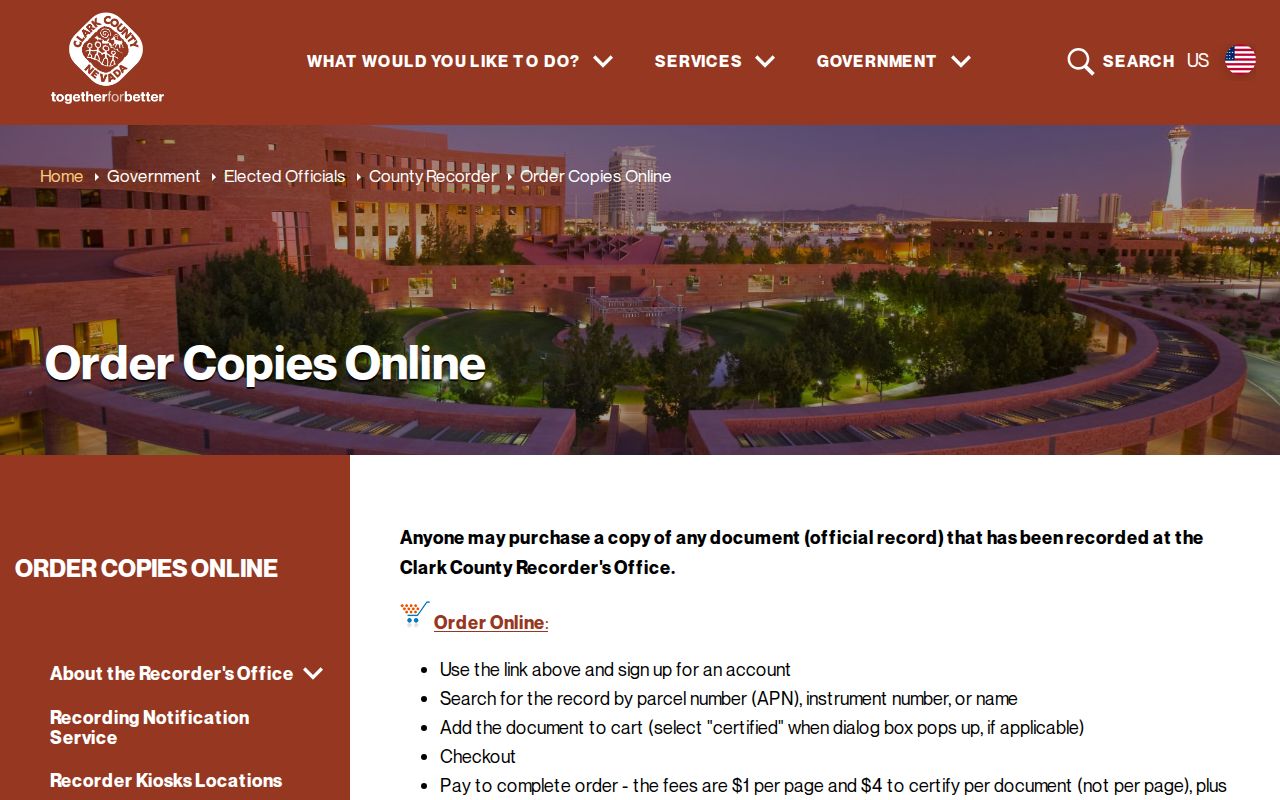
Ordering follows the index search, so a saved instrument number and page count reduces the risk of requesting the wrong document.
Mail and counter access remain important. The official request form calls for the book or instrument number, page count, requested copies, and certification choice. Mail payment is directed as cashier’s check or money order payable to the Clark County Recorder, not cash or personal checks. The Recorder says page counts can be found through the online index, at the office, or by phone, and gives a pre-1988 page-count email route at CCOROrder@ClarkCountyNV.gov.
Summerlin South Past Residents in Dated Publications
Deeds establish recorded transfers, but past residents require a different household layer. Regional Las Vegas directories, street files, newspaper notices, and library databases can show a person or family at an address in a specific publication year. Pair an entry with an obituary, recorded instrument, census source, probate path, or parcel history. The year is essential because a directory is a contemporaneous publication, not certified proof of occupancy.
For a historical address, first normalize the street spelling and house number with UNLV street files, the digitized 1952 Las Vegas map, Sanborn maps, and the current parcel’s legal description. The City of Las Vegas map and Sanborn materials provide regional street and structure context, but modern Summerlin South subdivisions may not appear. The fuller collection trail is available through the Summerlin South city directory research page.
Recorder services and public-inspection information provides the official alternative when an instrument summary is not enough. A research note should keep both the household source and the recorded-property source, rather than merging their dates or roles.
The public-inspection route is useful for checking an instrument against the dated directory or newspaper lead without treating either source as the whole story.
Summerlin South Past Residents and Development Dates
Summerlin South’s address history is shaped by its development chronology. The Land Use and Development Guide was approved in 1995, the Development Agreement in 1996, and updates were made in 2005. A modern street may therefore have no match in an older Las Vegas directory or Sanborn map. Do not force an old address into a newer subdivision by name alone. Compare the plat book and page, APN parent or child history, recorded road or right-of-way documents, old and new spelling, and County GIS data.
Building and Fire document search can be queried by record number, parcel number, location, and document type. Public Works development research allows approved applications to be searched by application number, address, or cross streets, though older plans may lack data. A permit name can identify an applicant, owner, contractor, engineer, architect, or complaint contact. Keep the role and date with it. Those records help date construction and development, but they do not create a resident list.