
Summerlin South City Directory Collections
No stand-alone shelf of historical Summerlin South volumes exists in public collections. That fits a town planned in the 1990s. The useful path runs regional instead. Las Vegas directory files, street-name files, historic newspapers, maps, and library databases carry the coverage a residents directory search needs. A directory entry is a dated publication record. It can place a person or firm within that year's coverage, but it proves no current address or occupancy.
| Collection | Years | Where held | Access |
|---|---|---|---|
| United States city directories, Nevada Territory | 1861-1882 | UNLV Microforms | Four microform reels; consult staff and the finding record |
| Las Vegas city-directory files | 1969 listed; related files 1909-1980 | UNLV Special Collections, MS-00809, box 12 | Physical regional-history collection; inspect title and page before quoting |
| Las Vegas street and street-name files | 1913-1971; names 1930-1968 | UNLV Special Collections, box 15 and related box 12 files | Finding-aid and staff route for address normalization |
| Las Vegas Age and later newspaper resources | Title-specific runs | UNLV and Las Vegas-Clark County Library District | Digitized, database, microfilm, or library-card access varies by title |
Never fill a missing year with a guessed publisher. A supposed reverse-directory run deserves the same caution. The public Library District page names no verified local criss-cross title, publisher, or shelf span for this street directory territory. Ask staff instead about reverse directories, telephone books, and householder guides. Confirm the exact format for the year you need.
Note: Record the title, publication year, page, and access source before treating any Summerlin South historical listing as evidence.
Summerlin South’s Regional Directory Past
Summerlin South is an unincorporated Clark County town. It lacks a long, separate directory run. The Land Use and Development Guide was approved in 1995, the Development Agreement in 1996, and updates followed in 2005. Older Las Vegas volumes still explain the regional setting. They capture older roads, businesses, and family connections across the valley. They are not records of a modern subdivision.
Filter every search by the directory's date first. A volume predating development may point instead to an earlier family address, a street precursor, or a related Las Vegas address. For a later address, compare the entry against the recorded legal description, subdivision plat, and parcel history. This matters most when a road was extended, re-platted, or spelled differently in a historical source. Deeds and plats settle the rest.
Summerlin South City Directory Research at UNLV
The Las Vegas-Clark County Library District genealogy resources page is the local starting point for licensed research tools. It covers newspapers, census material, directories, and branch help. HeritageQuest adds census material, histories, and historical directories. A library card unlocks many remote databases, though on-site access can differ. Ancestry Library Edition is not a free portal. It works only on the library network, not as a current resident roll.
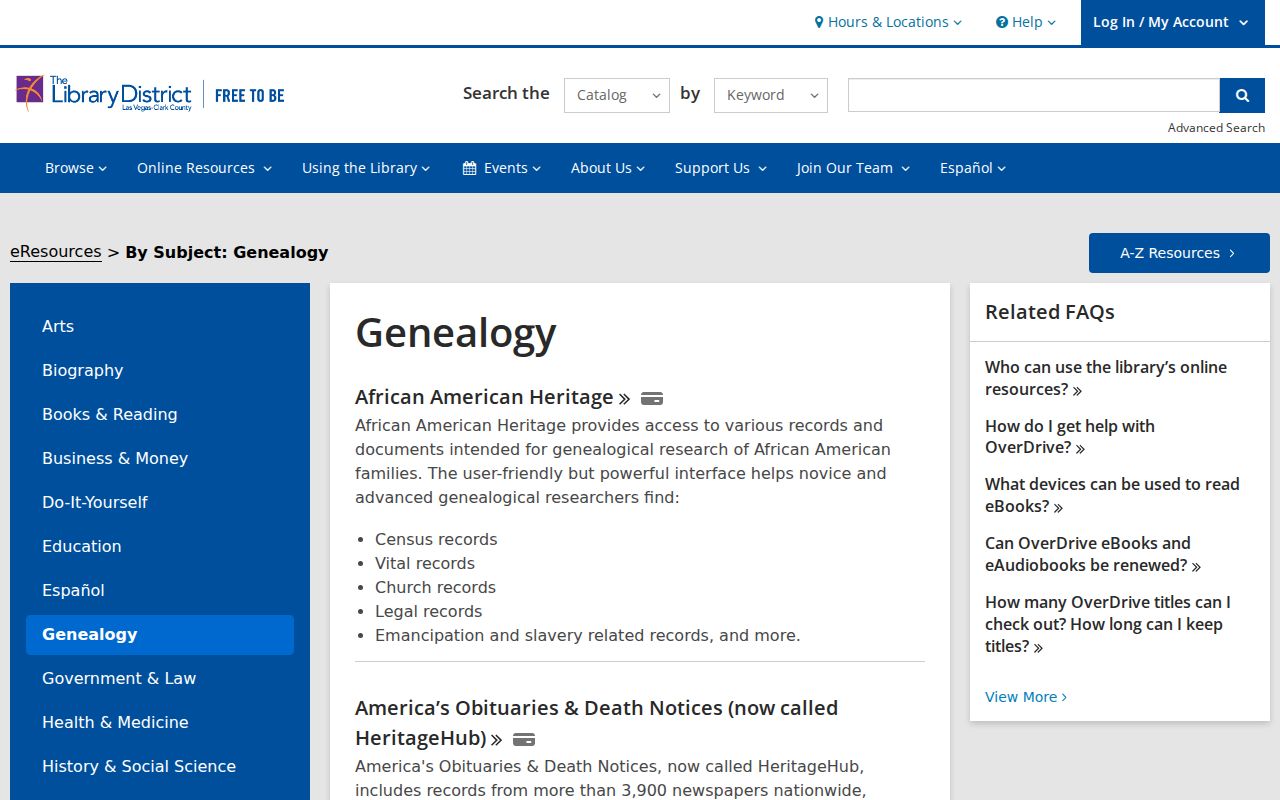
Start with the live resource list. Note each database title and the date you searched it. Licensed coverage can change over time. UNLV adds a strong Southern Nevada bridge. Its microforms record lists Nevada Territory directories from 1861 through 1882. The entries cover residents, heads of families, occupations, firms, churches, schools, associations, and banks. Street directories are included too. Special Collections also holds a 1969 Las Vegas directory. Regional-history files sit beside it. Any name or address still needs an item-level check before quoting.
Summerlin South Newspaper Windows
Newspapers fill the gaps between directory appearances. The Library District lists Las Vegas Age coverage for 1905-1915, 1917-1922, and 1924. UNLV reports a nearly complete digitization of Age issues from 1905 through 1947. Las Vegas Times runs from 1905 through 1906. Mine them for obituaries, notices, and address references. Keep the publication title and date beside every result you save.
The UNLV Nevada newspapers and microfilm page describes Review-Journal page images from March 30, 1929 through December 31, 1996. Full text starts September 29, 1996. A separate ProQuest window spans December 2, 1990 through December 31, 2012. The Las Vegas Sun is listed from 1996. Platforms differ. A gap in one database never proves a notice went unprinted.
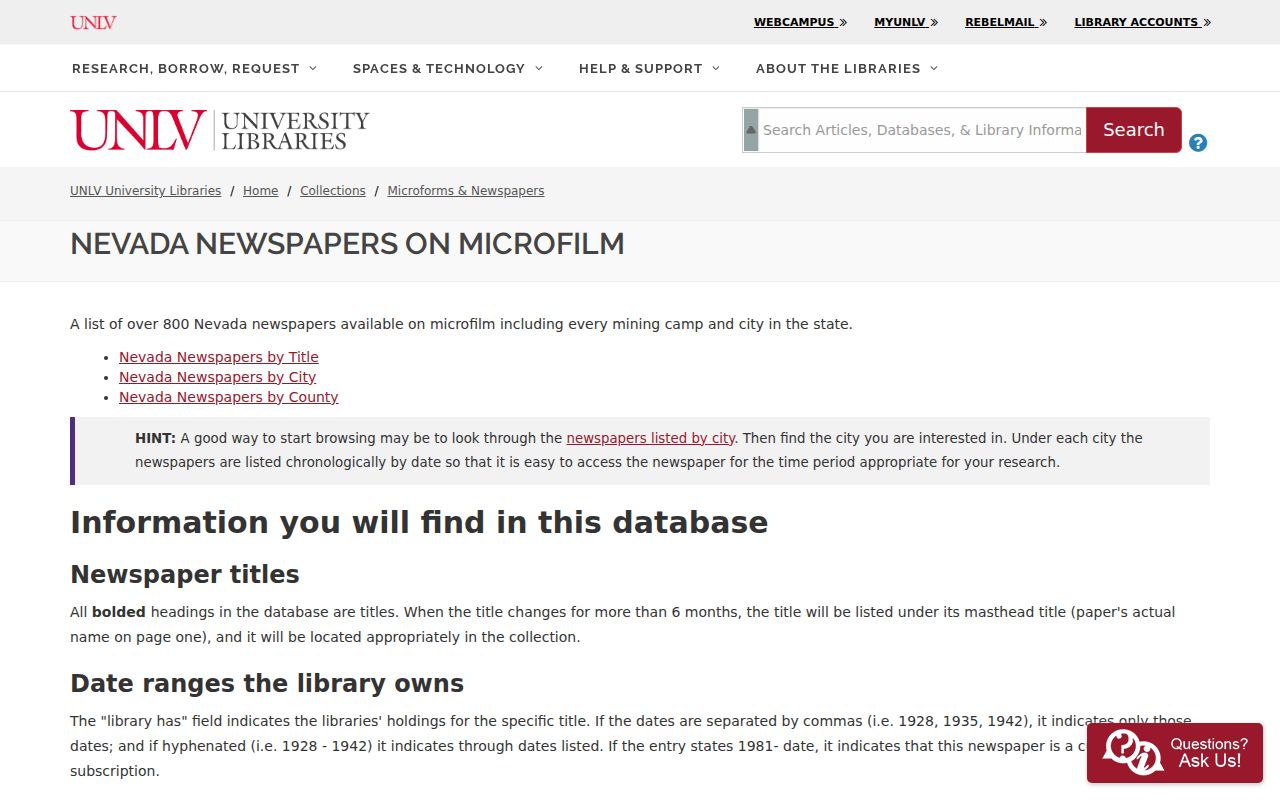
A newspaper hit is a lead, not a conclusion. Check it against an image, a directory page, a recorded instrument, or a library database record before it becomes part of a Summerlin South resident lookup.
Reading a Summerlin South City Directory Entry
No single sample entry fits every Summerlin South volume. Each publisher and year used its own key. A historical directory or telephone book may carry any mix of fields. Photograph or save the abbreviation page and the volume title before transcribing a line. Then label the entry by its publication year. A historical line must never be presented as a present residence.
| Name | Surname and given name, sometimes a spouse or household notation. |
|---|---|
| Address | A street or address line that should be checked against the year and place covered. |
| Occupation or firm | May appear in a historical directory, but wording and availability vary by publication. |
| Street listing | A separate street-order or address-oriented section may exist in some volumes. |
| Publication details | Title, year, publisher, page, and the archive or database supplying the image. |
- Criss-cross directory
- An address or street-order directory that can point from a location to a listed name. No verified Summerlin South run was located, so ask library staff for a title and year.
- Householder index
- A name-focused arrangement used to locate a household before checking any street section.
- Abbreviation key
- The publisher’s explanation of shortened terms and symbols, usually near the front of the volume. It should be captured with the entry.
Summerlin South City Directory Map Checks
The UNLV's digitized 1952 City of Las Vegas map offers an index. It also adds historical street context. Use it to normalize an older Las Vegas address. From there, compare the address with a modern parcel. The map cannot prove a modern Summerlin South location existed in 1952. Nor should it convert a historical address into a claim about who lives there now.
A map earns its keep only when it sits beside other evidence. Pair it with the UNLV street files. Add the legal description on a parcel record and any recorded plat. Alone, an old sheet can mislead more than it reveals.
Older regional context comes from National Park Service material. It lists Las Vegas Sanborn maps from 1923, 1928, and 1959-1961. Sanborn sheets lay out structures, property uses, and street context in fine detail. Many modern Summerlin South subdivisions simply do not appear on them. Note every research note with the map date and its geographic footprint. That keeps the Summerlin South record honest.
Tracing Summerlin South City Directory Households
Build a household trail one dated source at a time. Start with an old address pulled from a directory, map, obituary, or deed. Normalize the spelling and numbering against UNLV street files, the 1952 map, Sanborn material, and current Assessor or OpenWeb legal descriptions before going further. Then search the surname and the address across adjacent directory years. Some publications list entries by name and others by street, so a thorough Summerlin South city directory search works both paths.
- Save the directory title, year, page, and the exact name or address as printed.
- Check adjacent years for a move, a changed spelling, a spouse notation, or a new firm listing.
- Use the 1952 map or UNLV street files to test whether the old street form needs normalization.
- Pair the dated entry with a newspaper notice, recorded deed instrument, census source, vital-record route, or parcel history.
- Label the person’s role in each source, such as a historical directory listing or recorded party, rather than assuming current occupancy.
Historical collections cannot answer every question. An old address, once normalized, eventually points to a current parcel record. At that point the Summerlin South street directory route handles the address-keyed county sources. That lookup belongs to the present, not the archive. The residents directory trail and the parcel trail serve different moments in a property's life.
Note: A disappearance from a directory can reflect a move, a publication change, an unindexed entry, or death. It is not one certain event.
Summerlin South Archive Closure Options
The Nevada Historical Society Research Library in Reno is closed for renovations from January 2025 through December 2026. Staff access stays limited during that stretch. Its books, newspapers, maps, government documents, manuscripts, photographs, indexes, microfilm, and subscription databases remain strong collection leads for any residents directory project. Still, do not assume a visit is possible. Contact staff first. Shift a local search to UNLV, the Library District, or the Nevada State Library and Archives. Do so when the needed item is unavailable.
The Las Vegas Historical Society holds photographs, oral recollections, and local-history documents at 1114 S Main St, Suite 120, Las Vegas. It publishes its phone number as 702-580-5760. Its public materials show no exact city-directory run. A focused request naming a place, subdivision, builder, or address will serve you better than a vague ask for a directory shelf. A real gap in the record deserves to stay a gap rather than become a false collection claim.
The Nevada State Library, Archives and Public Records periodicals page offers another staff-assisted route to prior issues, government publications, and newspaper resources. Its holdings include no dedicated Summerlin South directory shelf. The National Archives publishes a 1930 directory list with Nevada entries for Reno, Carson, Sparks, and Washoe. Las Vegas is absent from that list. Absence there marks a search limitation, not proof that no Las Vegas publication ever existed. Keep every library or archive reply with your research note. That matters especially when the source is a finding aid rather than a digitized page.